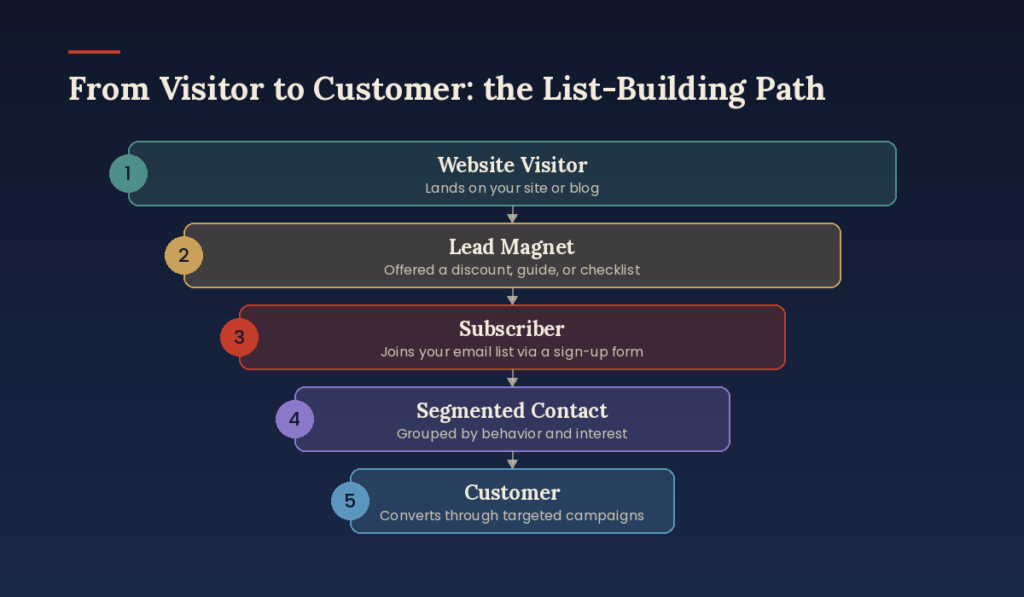
Email marketing remains one of the most reliable ways for businesses to reach their audience, build relationships, and drive revenue. Despite the rise of social media, chat apps, and countless new communication channels, email marketing consistently delivers one of the highest returns on investment of any digital marketing strategy. In this guide, we’ll walk through everything you need to know to build, launch, and optimize an effective email marketing program — whether you’re starting from scratch or looking to improve an existing strategy.
What Is Email Marketing?
Email marketing is the practice of sending targeted messages to a group of subscribers via email with the goal of promoting products, sharing information, nurturing leads, or building customer loyalty. Unlike social media, where algorithms control who sees your content, email marketing gives you direct access to your audience’s inbox. This makes it a powerful, owned channel that isn’t subject to the whims of a third-party platform.
At its core, email marketing involves collecting subscriber information (usually an email address), segmenting that audience based on behavior or preferences, and sending relevant, timely messages that move recipients toward a desired action — whether that’s making a purchase, reading a blog post, or signing up for an event.
Why Email Marketing Still Matters
Some marketers assume email is outdated, but the data tells a different story. Email marketing continues to outperform many other channels because it is:
- Cost-effective: Sending emails costs far less than paid advertising, and most email service providers offer affordable plans for businesses of every size.
- Direct and personal: Emails land directly in a subscriber’s inbox, creating a more intimate connection than a fleeting social media post.
- Highly measurable: Open rates, click-through rates, conversions, and unsubscribe rates give you clear insight into what’s working.
- Automatable: Once set up, automated email sequences can nurture leads and drive sales without ongoing manual effort.
- Owned, not rented: You own your email list, unlike your social media followers, which exist on platforms you don’t control.
These advantages make email marketing an essential component of any well-rounded digital marketing strategy.
Building Your Email List
Before you can start sending campaigns, you need subscribers. Building a quality email list is arguably the most important step in email marketing, because even the best-designed campaign won’t succeed if it’s sent to disengaged or irrelevant contacts.
1. Create Valuable Lead Magnets
Offer something of value in exchange for an email address — a discount code, a free ebook, a checklist, or exclusive access to content. The key is to make the offer relevant to your target audience so you attract subscribers who are genuinely interested in what you provide.
2. Use Sign-Up Forms Strategically
Place sign-up forms on high-traffic areas of your website: your homepage, blog posts, checkout pages, and exit-intent pop-ups. Keep the form simple — asking only for an email address (and maybe a first name) reduces friction and increases conversions.
3. Leverage Social Media and Events
Promote your email list on social channels and during webinars, in-person events, or podcasts. Cross-promotion helps you reach people who already engage with your brand elsewhere.
4. Avoid Purchased Lists
It might be tempting to buy an email list to jump-start your efforts, but this is a mistake. Purchased lists typically contain uninterested or invalid addresses, leading to poor engagement, high spam complaints, and potential damage to your sender reputation.
Segmenting Your Audience
Not all subscribers are the same, and treating them as a single group limits the effectiveness of your email marketing. Segmentation allows you to divide your list into smaller groups based on shared characteristics, such as:
- Purchase history
- Engagement level (active vs. inactive subscribers)
- Geographic location
- Demographics
- Position in the customer journey (new lead vs. loyal customer)
By segmenting your audience, you can tailor your messaging to be more relevant, which typically results in higher open rates, click-through rates, and conversions. For example, a new subscriber might receive a welcome series introducing your brand, while a repeat customer might receive product recommendations based on past purchases.
Crafting Effective Email Campaigns
Once your list is built and segmented, it’s time to create compelling campaigns. Here are the essential elements of a successful email marketing message:
Subject Lines
Your subject line is the first thing subscribers see, and it determines whether they open your email at all. Keep it concise, create curiosity or urgency, and avoid spammy language (like excessive exclamation points or all caps) that could trigger spam filters.
Personalization
Simple personalization — like using the subscriber’s first name — can boost engagement, but true personalization goes further. Use data about a subscriber’s behavior and preferences to recommend products, tailor content, or send messages at optimal times.
Clear Call-to-Action (CTA)
Every email should have one clear, primary action you want the reader to take. Whether it’s “Shop Now,” “Read More,” or “Register Today,” your CTA should be visually prominent and easy to find.
Mobile-Friendly Design
More than half of all emails are opened on mobile devices, so your emails must look great on smaller screens. Use responsive templates, short paragraphs, and large, tappable buttons to ensure a seamless mobile experience.
Consistent Branding
Your emails should reflect your brand’s voice, colors, and overall identity. Consistency builds trust and helps subscribers immediately recognize your messages in a crowded inbox.
Types of Email Marketing Campaigns
There are several types of campaigns you can incorporate into your email marketing strategy, each serving a different purpose:
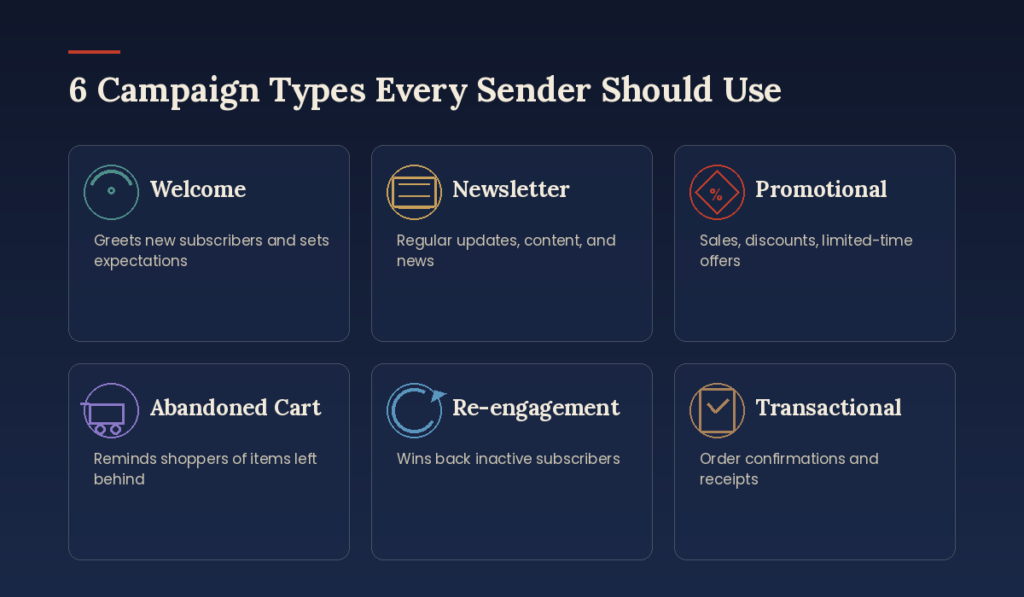
- Welcome emails: Sent immediately after someone subscribes, introducing your brand and setting expectations.
- Newsletters: Regular updates featuring blog content, company news, or industry insights.
- Promotional emails: Highlight sales, discounts, or limited-time offers.
- Abandoned cart emails: Remind customers about items left in their shopping cart, often recovering lost sales.
- Re-engagement campaigns: Target inactive subscribers to win back their attention or clean your list of unengaged contacts.
- Transactional emails: Order confirmations, shipping notifications, and receipts that provide essential information.
A well-rounded email marketing strategy uses a mix of these campaign types to nurture subscribers at every stage of their journey.
Automation: Working Smarter, Not Harder
One of the biggest advantages of modern email marketing platforms is automation. Rather than manually sending every email, you can set up automated workflows triggered by specific subscriber actions. Common automation examples include:
- A welcome series triggered when someone joins your list
- A birthday or anniversary email sent automatically each year
- A drip campaign that nurtures leads over several weeks
- An abandoned cart sequence triggered when a shopper leaves items unpurchased
Automation ensures your subscribers receive timely, relevant messages without requiring constant manual effort, freeing up time for strategy and creative work.
Measuring Success: Key Email Marketing Metrics
To improve your email marketing over time, you need to track the right metrics:
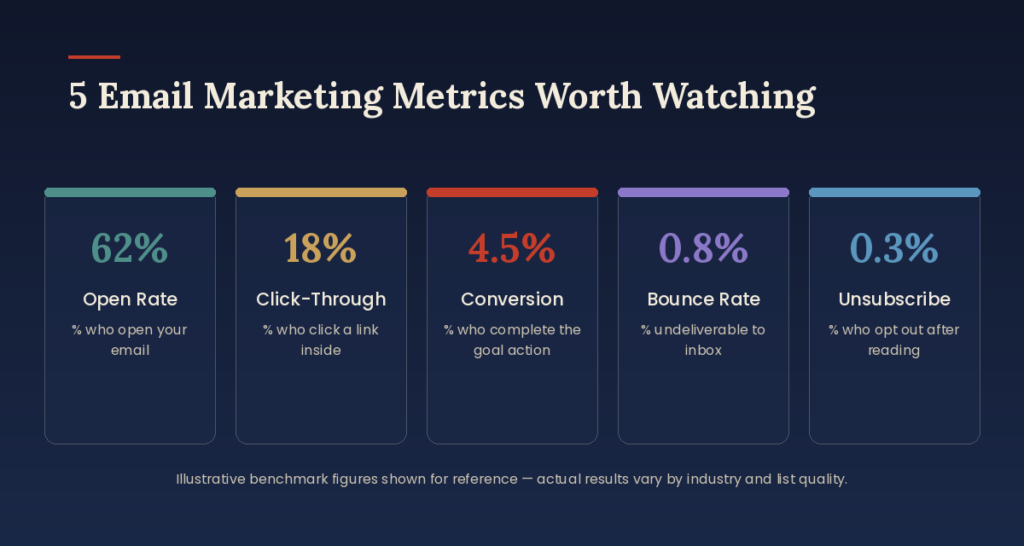
- Open rate: The percentage of recipients who open your email, indicating how well your subject line performed.
- Click-through rate (CTR): The percentage of recipients who clicked a link, showing how engaging your content and CTA were.
- Conversion rate: The percentage of recipients who completed the desired action, such as making a purchase.
- Bounce rate: The percentage of emails that couldn’t be delivered, which can signal list quality issues.
- Unsubscribe rate: The percentage of recipients who opted out, helping you gauge content relevance and frequency.
Regularly reviewing these metrics allows you to identify what’s working and adjust your strategy accordingly.
A/B Testing for Continuous Improvement
A/B testing (or split testing) involves sending two variations of an email to small segments of your list to see which performs better before sending the winning version to your full audience. You can test:
- Subject lines
- Send times
- Email design and layout
- CTA wording and placement
- Personalization tactics
Over time, consistent A/B testing helps you refine your email marketing approach based on real data rather than assumptions.
Best Practices to Keep in Mind
- Maintain list hygiene: Regularly remove inactive or invalid email addresses to protect your sender reputation.
- Follow email regulations: Comply with laws like CAN-SPAM and GDPR by including unsubscribe links and obtaining proper consent.
- Don’t overwhelm subscribers: Find a sending frequency that keeps your brand top of mind without causing fatigue.
- Test before sending: Always preview and test emails across devices and email clients before hitting send.
- Focus on value: Every email should offer something useful, whether it’s information, entertainment, or a good deal.
Final Thoughts
Email marketing continues to be one of the most effective tools available to businesses looking to build lasting relationships with their audience and drive measurable results. By focusing on list building, segmentation, compelling content, automation, and continuous testing, you can create an email marketing strategy that not only reaches inboxes but genuinely resonates with your subscribers.
Whether you’re a small business just starting out or an established brand refining your approach, investing time and effort into email marketing will pay dividends in engagement, loyalty, and revenue for years to come.
FAQ
1. What is email marketing?
Email marketing is the practice of sending targeted messages to subscribers to promote products, share information, nurture leads, or build customer loyalty. It’s a direct, owned channel that isn’t controlled by a third-party algorithm.
2. Is email marketing still effective in 2026?
Yes. Email marketing continues to deliver one of the highest returns on investment of any digital channel because it’s cost-effective, highly measurable, and lets you reach subscribers directly in their inbox.
3. How do I start building an email list?
Offer a valuable lead magnet (like a discount, checklist, or ebook), place sign-up forms in high-traffic spots on your site, and promote your list through social media and events. Avoid buying email lists — they hurt engagement and sender reputation.
4. What’s a good email open rate?
Average open rates vary by industry, but many senders see rates in the 20–40% range. Rates above 50% are strong, though results depend heavily on list quality and subject line performance.
5. How often should I send marketing emails?
There’s no universal number — it depends on your audience and content supply. The key is consistency without overwhelming subscribers. Many brands start with one to two emails per week and adjust based on engagement and unsubscribe rates.
6. What’s the difference between segmentation and personalization?
Segmentation is dividing your list into groups based on shared traits (like purchase history or location). Personalization is tailoring the message itself — using a subscriber’s name, behavior, or preferences — often applied within a segment.
7. What email marketing metrics matter most?
Open rate, click-through rate, conversion rate, bounce rate, and unsubscribe rate are the core metrics. Conversion rate is usually the most important, since it reflects whether emails are actually driving the desired action.
8. Do I need automation to succeed with email marketing?
Automation isn’t required, but it makes email marketing far more efficient. Automated sequences like welcome series and abandoned cart reminders nurture subscribers without manual effort at every step.